

Alyssa Lunman and Edna Karel Binga Leboundou and Honora LaRock
Regulation of Cell Migration in C. elegans
Abstract:
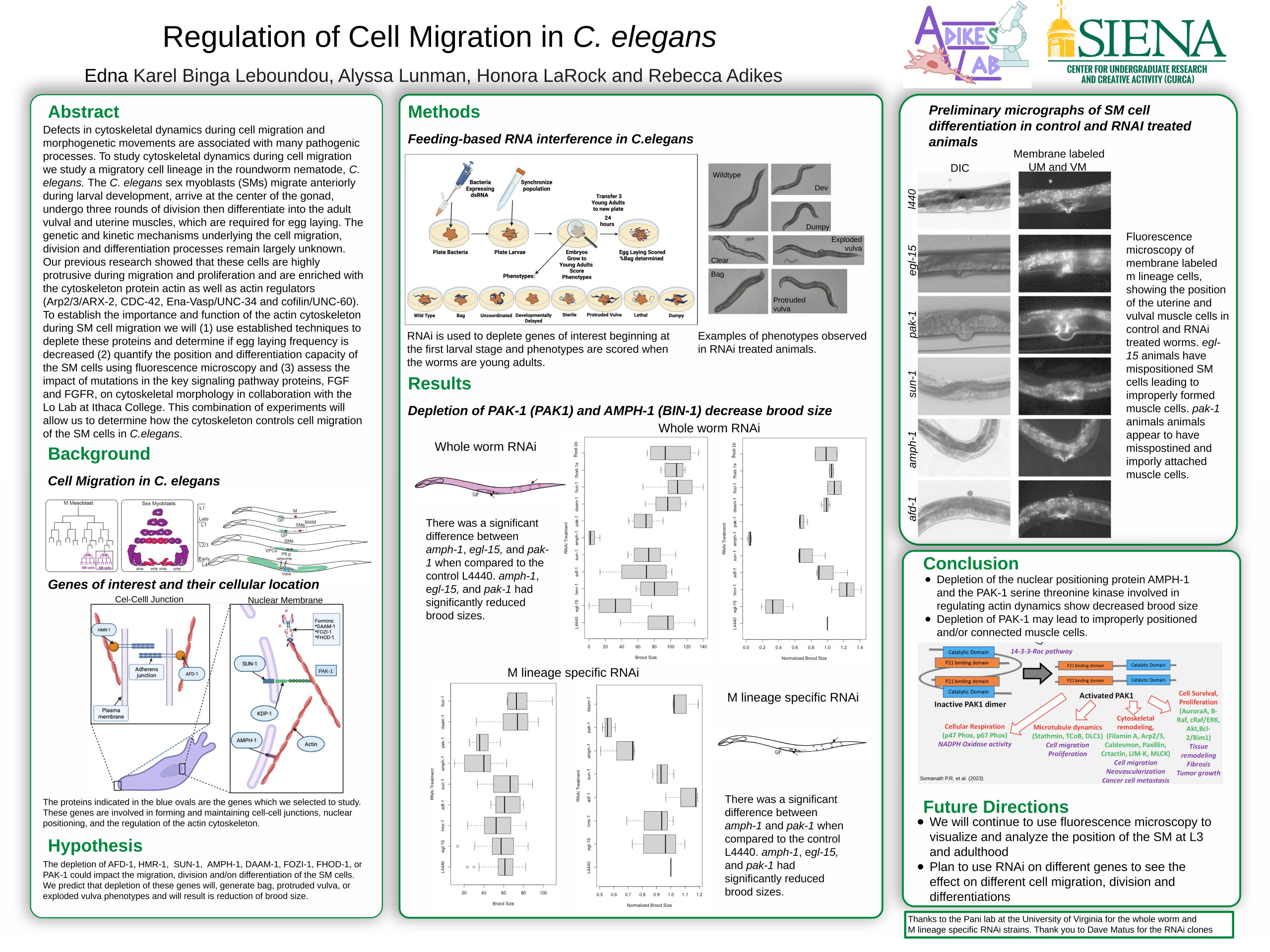
Defects in cell migration are associated with many pathogenic processes. To study cell migration in vivo we utilize a migratory cell lineage in the roundworm nematode, C. elegans, called sex myoblasts (SMs). These cells migrate anteriorly during larval development, arrive at the center of the gonad, undergo three rounds of division then differentiate into the adult vulval and uterine muscles, which are required for egg laying. The genetic and kinetic mechanisms underlying the cell migration, division and differentiation processes remain largely unknown. To establish the importance and function of actin nucleation, cell adhesion and nuclear position in the SM lineage, we used RNAi to deplete specific proteins, then observed plated level phenotypes and scored brood size. In animals where RNAi led to observable and quantifiable phenotypic differences, we used fluorescence microscopy to investigate the position and morphology of the SM cells. We found that the depletion of genes involved in cell adhesion and nuclear position lead to dumpy, clear, protruded vulva, exploded vulva, developmental delay, and bag phenotypes. We are currently working to analyze the fluorescence micrographs to determine if the position and/or morphology of the SM cells was impacted by the genes of interest.
Title
Regulation of Cell Migration in C. elegans
Faculty Advisor
Dr. Rebecca Adikes
Course
Summer Research
Presentation Type
Poster
Location
Table 39